 +590 690 37 27 73
 version Française
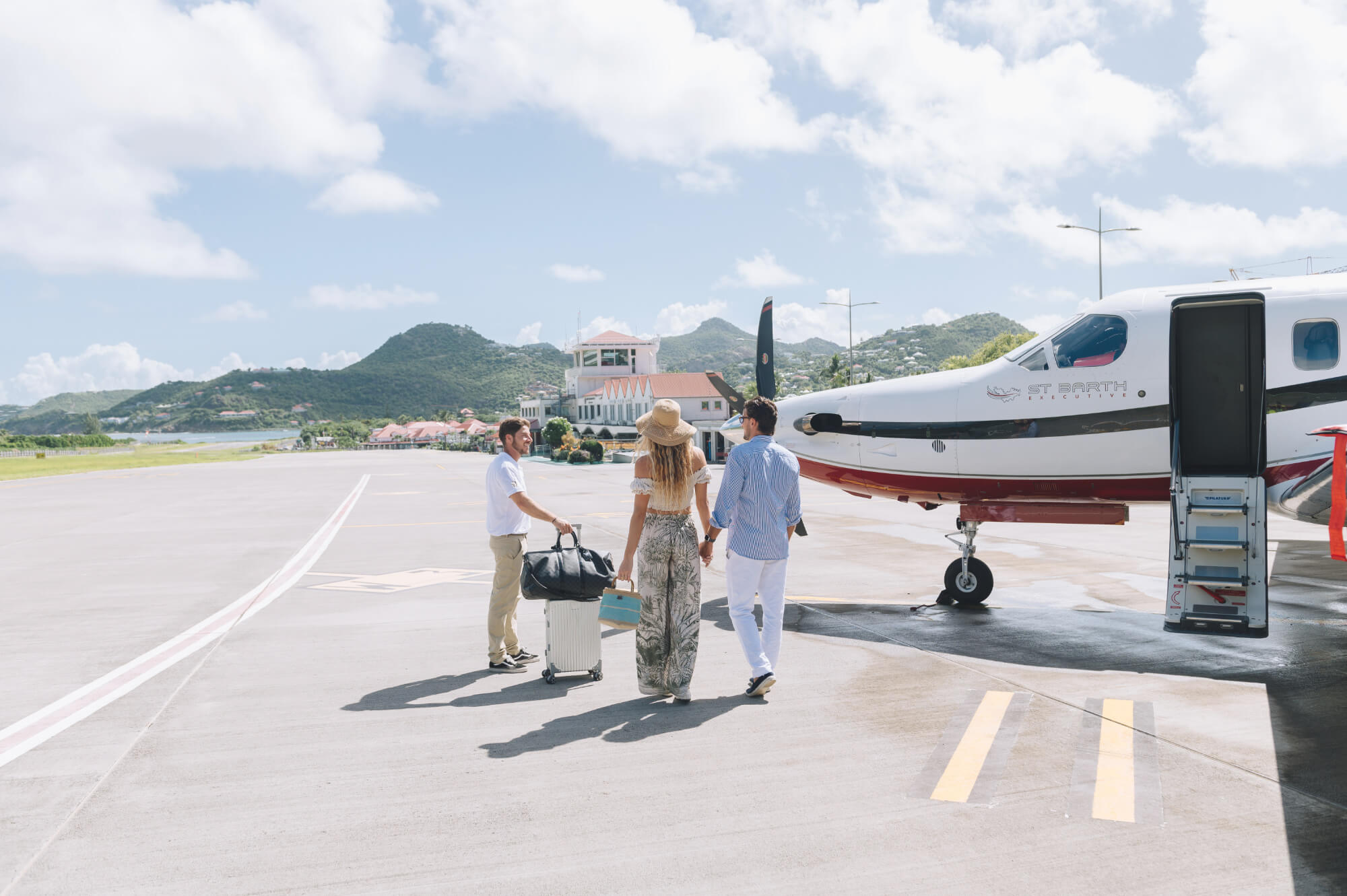
The Saint-Barthélemy Airport: a legendary place, between history and uniqueness
A bit of history
The airport bears the name of Gustaf III of Sweden, in tribute to the king under whose reign the island was briefly a Swedish possession (1784–1878).
In its early days, in the 1950s, the runway was just a grass field. Pilots sometimes had to wait for the sheep grazing on it to move aside before they could land!
On February 18, 1950, history changed course: Rémy de Haenen, aviator, adventurer, and visionary, achieved the first official landing on this rudimentary runway. This feat paved the way for aviation in St. Barth and marked the birth of a unique airport in the world.
In the years that followed, other pioneers contributed to writing this history.
Jean "Dormois" Dormoy, an iconic pilot of the 60s-70s, became a key figure in local air connections.
Guy Gumbs, one of the first native pilots, actively participated in the development of regional flights.
Lucien Magras, pilot and entrepreneur, played a decisive role in structuring and modernizing air activity.
These men shaped the airport's identity and passed down a demanding aeronautical culture that endures to this day.
An extraordinary terrain
With only 646 meters of runway, Saint-Barthélemy Airport is ranked among the shortest in the world to accommodate regular commercial traffic.
Its approach is spectacular: aircraft cross the col de la Tourmente before diving toward the runway, which ends at the edge of the Caribbean Sea. This setting, both grandiose and impressive, attracts aviation enthusiasts from around the world and contributes to the airport's international reputation.
A legacy of mastery and expertise
Landing and taking off in St. Barth require specific training. Only specially qualified pilots are authorized to operate there. This legacy stems directly from the first aviators who, through their audacity and expertise, demonstrated that aviation in St. Barth demanded particular skill.
Even today, each flight embodies this spirit: precision, safety, and excellence.
An airport serving the island's prestige
Each year, more than 200,000 passengers pass through Gustaf III.
The airport exclusively accommodates small-capacity aircraft (up to approximately 19 seats), making it an intimate and selective gateway, perfectly aligned with St. Barth's image.
Activity can reach impressive peaks: on the busiest days, up to 350 air movements have been recorded (that is, the total of landings and takeoffs). A remarkable figure for a runway of only 646 meters, and proof of the intensity this miniature yet prestigious airport can experience.
Unlike major international hubs, there are no endless lines or impersonal structures: the experience is human-scaled, reflecting the island's discreet elegance.
In summary
From the grass runway shared with sheep to Rémy de Haenen's first landing, through the essential contributions of Dormois, Gumbs, and Magras, Saint-Barthélemy Airport embodies the entire evolution of the island.
Far more than a simple infrastructure, it has become a symbol of authenticity, mastery, and prestige, transforming each arrival into an unforgettable experience.



 St Maarten

